
Commercial Thermal Envelope
Explore commercial thermal envelope improvements, including air sealing, insulation, windows, and doors, designed to improve building performance and reduce energy costs.
Improving the Energy Performance of Your Building’s Thermal Envelope
Your building’s thermal envelope plays an important role in energy use, occupant comfort, and operating costs. The thermal envelope includes the walls, windows, doors, roof, and foundation that separate indoor and outdoor environments.
Improvements to these systems can help reduce air leakage, manage moisture, improve comfort, and lower heating and cooling costs. According to the U.S. Department of Energy, building envelope improvements can significantly reduce heating and cooling demand in commercial buildings.
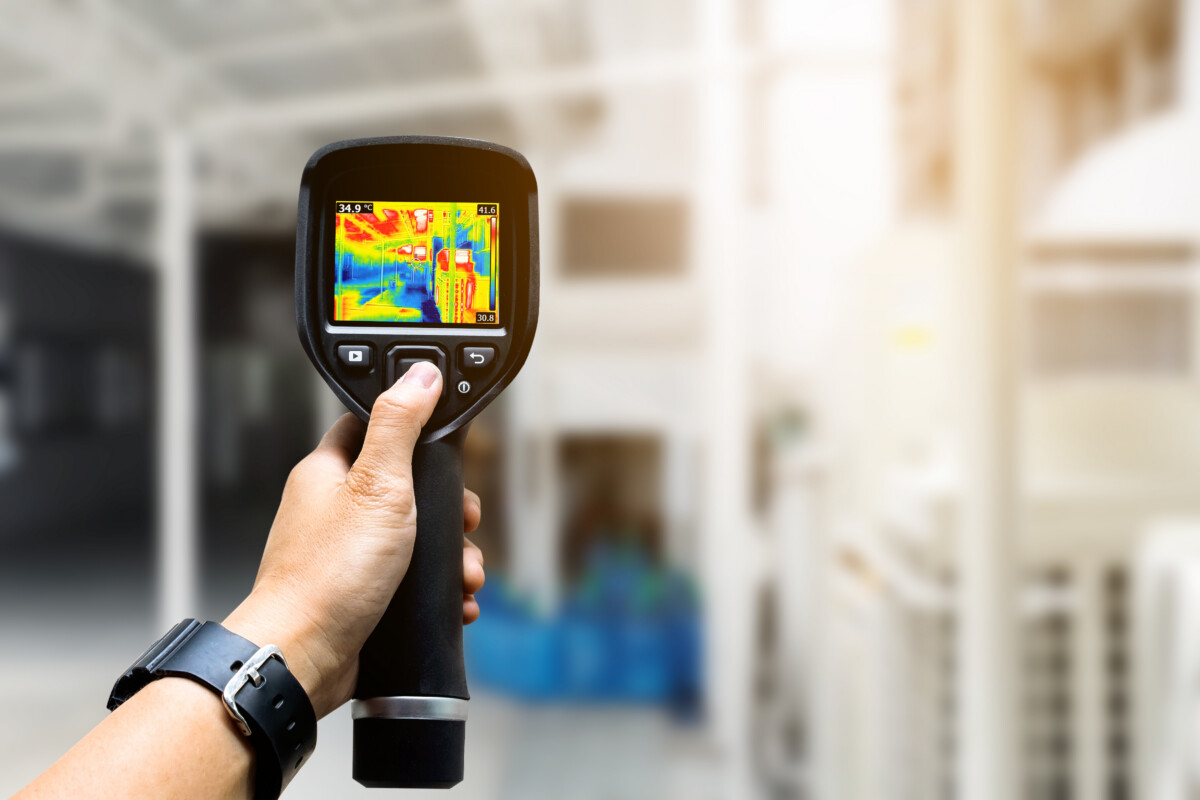
Infrared cameras allow energy auditors to assess heat loss through a building’s thermal envelope
Building Performance Starts Here
Reduce Operating Costs
As energy prices rise, using less energy has a direct impact on your profitability. Energy efficiency also positively impacts the resale value of your buildings when you go to sell.
Improve Occupant Comfort
Thermal comfort has a significant impact on the satisfaction of a building’s occupants. Keeping your employees, customers, and tenants comfortable is key to their happiness and retention.
Support Long-Term Building Performance
Addressing climate change is everyone’s responsibility. Your customers will love you for it too. Lease rates for ‘green’ buildings are often higher than average, so it’s also just good business.
Common Improvement Opportunities
Many thermal envelope projects focus on reducing air leakage, improving insulation performance, and identifying areas where heat is being lost. Explore the topics below to learn about common building envelope improvements and strategies that can help improve comfort, reduce energy use, and support long-term building performance.
Reducing the amount of air flowing in and out of your building is often one of the most cost-effective ways to reduce heating and cooling costs while improving indoor comfort.
Air sealing projects may include the use of spray foam, rigid foam, caulk, flashing, and weather stripping to address gaps and leaks throughout the building envelope. These improvements can also help address drafts, humidity concerns, and indoor air quality issues.
Many projects begin with a blower door test to identify major leakage points. Air sealing should generally be completed before adding insulation to maximize performance and avoid future building envelope issues.
Windows and doors are often considered during building upgrade projects. While energy savings alone may not always justify the cost of replacement, there are many other reasons businesses choose to upgrade, including:
- Improving safety
- Addressing aging or deteriorated components
- Eliminating condensation issues
- Improving aesthetics
- Improving functionality and occupant comfort
Some lower-cost improvements can also make a meaningful difference, including:
- Installing tight-fitting window coverings
- Closing curtains or shades during winter evenings
- Installing storm windows or inserts
- Repairing or replacing weather stripping
These measures can help reduce air leakage and heat loss without requiring full window replacement.
Additional Resources
Explore additional guidance, best practices, and tools to help support thermal envelope improvements. Whether you’re evaluating a weatherization project, developing a long-term building improvement plan, or looking for technical resources, the organizations below offer valuable information on building performance, energy efficiency, and envelope optimization.